Structural Drying and Dehumidification in Paradise Valley, AZ
Surface dry is not dry. The crews use air movers and LGR dehumidifiers to dry slabs and wall cavities to a verified standard, then prove it with meters.
(928) 370-7201Tap the 24/7 northeast Valley dispatch line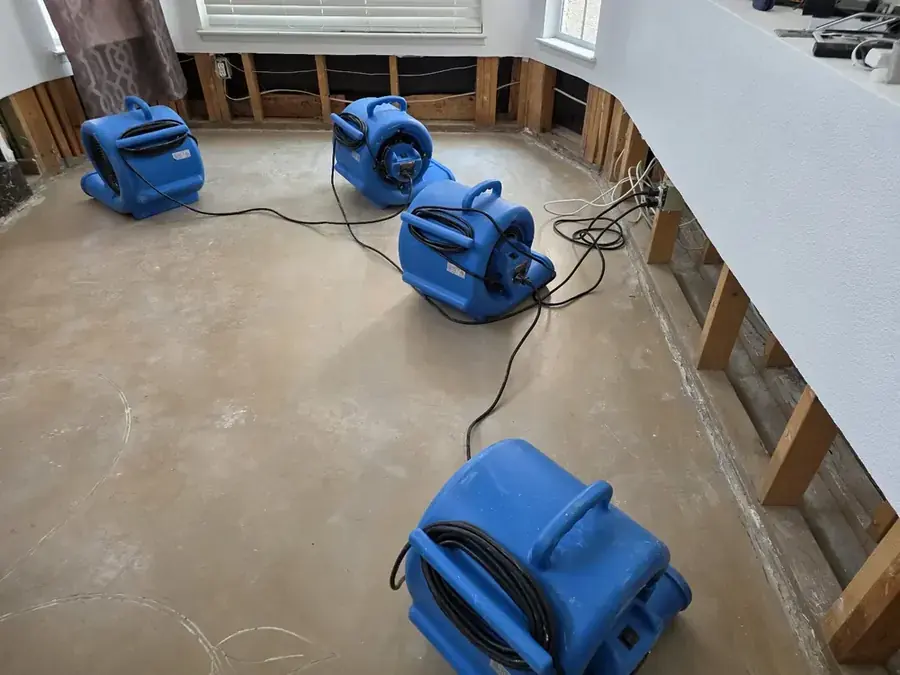
Extraction gets the water you can see. Structural drying gets the water you cannot: the moisture soaked into the concrete slab, the wall cavities, the framing, and under the cabinets. It is the step that decides whether a home is truly restored or quietly grows mold behind the paint, and it is the step people skip when they try to dry a loss with household fans.
How a structural drying and dehumidification dry-out is handled in Paradise Valley
Call and dispatch
The restoration team answers 24/7, and the nearest Valley crew heads out with pumps, air movers, and moisture meters.
Assess and stop it
The crew finds the source and the full reach of the water, including what soaked into the slab, subfloor, and wall cavities.
Extract and dry
The extraction crew pulls the standing water, then runs air movers and dehumidifiers to the IICRC S500 dry standard, not just the surface.
Verify and document
The drying team logs moisture readings until the structure is dry, then documents the loss with the photos and daily readings an adjuster needs.
Why desert air is not enough
Arizona air is dry, which fools people into thinking a wet home will just air out. It will not, not the parts that matter:
- A concrete slab holds moisture deep and gives it up slowly
- Wall cavities and insulation trap water where no breeze reaches
- Household fans move surface air but do not pull moisture from the structure
- Warm, damp cavities grow mold within a day or two
The IICRC drying standard exists because drying to a measured target, not a guess, is what prevents the secondary damage that shows up weeks later.
How the structural drying works in Paradise Valley
The crews build a drying system sized to the loss and prove the result with numbers.
- Air movers push air across wet surfaces to speed evaporation
- Low-grain refrigerant dehumidifiers pull that moisture out of the air
- Mat systems and cavity drying reach slabs and wall interiors
- The local crews log moisture readings daily until they hit a dry standard
Drying follows water extraction on every job, and when a leak sat long enough to start growth the restoration crews move into mold remediation. The CDC on mold is clear that fast, complete drying is the best prevention there is.
Want the structure dried right the first time? Call and a crew builds a drying plan and proves it with readings.
☎ Call (928) 370-7201What a proper drying plan looks like
Drying is not just setting fans and leaving. The response crews size the equipment to the space and the materials, then adjust it as the readings change.
- Enough air movers and dehumidifier capacity for the wet area
- Placement that reaches slabs, cavities, and hard-to-dry corners
- Daily readings that tell the crews when to move gear and when to stop
That measured approach is what separates a home that is truly dry from one that feels dry on the surface and grows mold behind the wall.
Ask to see the readings
A proper drying job ends with moisture readings that confirm the structure hit a dry standard, not just a technician saying it feels dry. The crews show you the numbers before the local crews pull the equipment.
Why the northeast Valley calls the local pros first
Rapid local response
The response team answers 24/7, and the nearest crew heads out the moment you call, day or night, across Paradise Valley and the northeast Valley.
IICRC S500 drying standard
Trained crews with truck-mounted extractors, air movers, and moisture meters dry to the IICRC S500 standard, not a mop and a fan.
Claim-ready documentation
The loss is documented with photos and daily moisture readings, the paperwork an adjuster needs to move a claim.
Local water experts
Monsoon roof leaks, slab leaks, AC overflows, and hard water, so the local pros know how water moves in a Sonoran Desert home.
From Paradise Valley across the northeast Valley
Based in Paradise Valley, the local water damage pros respond across the northeast Valley, day or night.
Based in Paradise Valley, the local crews cover the whole northeast Valley, day or night, with rapid local response.
Coverage runs across Paradise Valley, Scottsdale, Phoenix, Arcadia, Biltmore, Fountain Hills, Cave Creek, Carefree, and the northeast Valley.
See every neighborhood and ZIP covered ›Related restoration services
Paradise Valley water damage questions, answered
How long does structural drying take?
Most homes dry in 3 to 5 days, longer for a saturated slab, plaster, or hardwood. The crews monitor moisture daily and only pull the equipment when the readings confirm the structure has reached a dry standard.
Can I just run my own fans and save money?
Household fans move surface air but do not pull moisture out of a slab, a wall cavity, or framing. Skipping professional drying is the most common reason a water loss turns into a mold problem weeks later.
Why do you need dehumidifiers if the air is so dry here?
Air movers pull moisture out of the structure and into the air, and the dehumidifier removes it before it soaks back in. Even in the desert, a closed, wet home needs that controlled cycle to dry the cavities and the slab.
How do you know when it is dry?
The crews take daily moisture readings with meters and compare them to a dry standard for the materials involved. When the numbers confirm the structure is dry, the local crews pull the equipment, and the restoration crews show you the readings.
Is drying covered by insurance?
Yes, structural drying is a standard part of a covered water damage claim. The crews document the daily readings, which is exactly what an adjuster wants to see.
A local Paradise Valley crew is standing by
Water sitting means damage spreading. Call AZ Flood Cleanup and a local crew heads out across Paradise Valley and the northeast Valley, day or night.
(928) 370-7201Call now, a local crew picks up day or night